
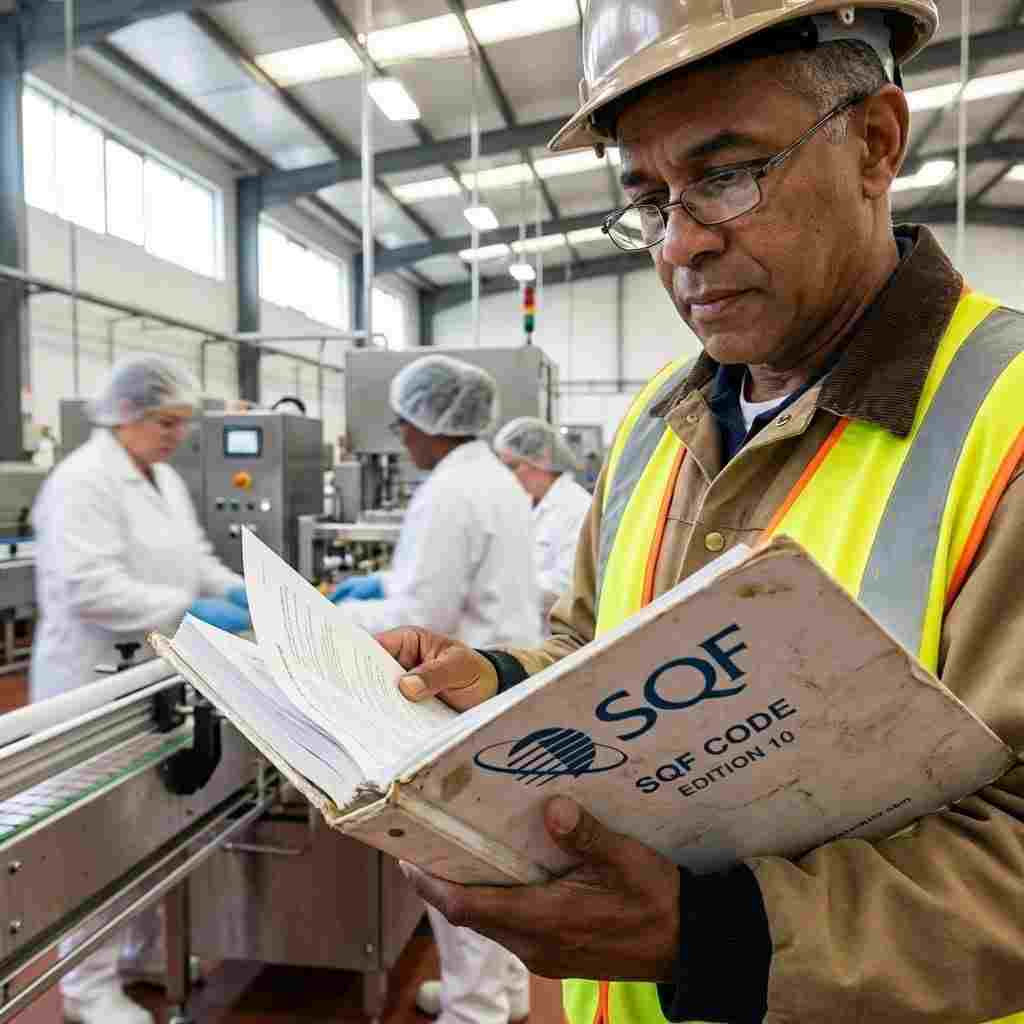
SQF Certification: What It Is, What It Costs, and How to Get It in 2026

Daria Van De Grift
SQF certification is a GFSI-benchmarked food safety and quality certification administered by the Safe Quality Food Institute (SQFI), a division of FMI, The Food Industry Association. It verifies through independent third-party audit that a site operates a documented food safety management system built on HACCP principles. For food manufacturers, processors, packers, and distributors selling into major North American retail, SQF certification functions as a commercial prerequisite rather than a voluntary credential.
The program covers more than 12,000 certified sites worldwide and is accepted by retailers including Walmart, Kroger, Costco, and Target as proof of supplier food safety capability.
One thing has changed significantly as of 2026. SQFI released SQF Edition 10 in March 2026, and audits against the new edition are expected to begin in January 2027 pending completion of GFSI benchmarking. Facilities certifying now will certify under Edition 9 and transition to Edition 10 within their next cycle, which affects how you should build your documentation system from the start.
This guide covers what SQF certification requires, the levels and codes available, realistic costs and timelines, how it compares to BRCGS and FSSC 22000, and what the Edition 10 transition means for your facility.
What Is SQF Certification?
SQF certification is a food safety management system certification that demonstrates a site has implemented, documented, and verified controls covering hazard analysis, prerequisite programs, supplier approval, traceability, and continuous improvement.
Three characteristics distinguish it from a regulatory inspection:
It is voluntary but commercially mandatory. No law requires SQF certification. Most major retailers and food service buyers require a GFSI-benchmarked certification from suppliers, and SQF is the most widely adopted option in North America.
It is GFSI-benchmarked. The Global Food Safety Initiative benchmarks certification programs against a common set of requirements. GFSI recognition means a buyer accepting any benchmarked scheme will accept SQF, which reduces duplicate auditing across your customer base.
It is systems-focused, not snapshot-focused. An FDA inspection assesses conditions at a point in time. An SQF audit assesses whether your management system reliably produces safe product, which requires documented evidence spanning the full certification period.
SQFI is owned and administered by FMI, The Food Industry Association, which gives the program direct alignment with the retail buyers that drive certification demand.
Who Needs SQF Certification?
You likely need SQF certification if any of the following apply:
- A retail or food service customer has specified GFSI certification as a condition of supply
- You are bidding on private label or co-manufacturing contracts
- You export to markets where buyers expect GFSI-benchmarked certification
- You supply ingredients or packaging to manufacturers who must verify their own supply chain
- You are scaling from regional to national distribution
Operations commonly certified under SQF include primary producers, food manufacturers and processors, beverage producers, pet food manufacturers, packaging material manufacturers, storage and distribution operations, and food retailers and wholesalers.
If no customer has asked for it and you have no plans to pursue accounts that will, certification may be premature. The cost is meaningful and the maintenance burden is ongoing. The honest test is whether certification unlocks revenue you cannot access otherwise.
SQF Certification Levels Explained
SQF offers a tiered structure, and understanding which tier you need prevents both overbuying and underqualifying.
| Program | What It Covers | GFSI-Benchmarked | Typical Use Case |
| SQF Fundamentals (Basic) | Core GMP and prerequisite programs | No | Small operations building toward certification |
| SQF Fundamentals (Intermediate) | GMPs plus introductory food safety planning | No | Operations progressing toward full certification |
| SQF Food Safety Code | Full HACCP-based food safety management system | Yes | Standard certification for most manufacturers |
| SQF Quality Code | Food safety plus product quality management | Yes (food safety portion) | Sites needing quality assurance beyond safety |
The critical distinction: only the SQF Food Safety Code satisfies a buyer requirement for GFSI certification. The Fundamentals programs are development pathways, not substitutes. If your customer says “we need GFSI certification,” the Fundamentals tier will not satisfy that requirement.
The SQF Quality Code is an optional layer added on top of food safety certification. It addresses product quality attributes, specifications, and consistency rather than safety alone. Most manufacturers do not need it unless a specific customer requires it.
Which SQF Code Applies to Your Operation?
SQFI publishes separate codes by sector. Selecting the wrong code means auditing against requirements that do not match your operation.
- Primary Production covers growing, harvesting, and farming operations
- Food Manufacturing covers processing, manufacturing, and packing of food products
- Food Packaging Manufacturing covers producers of packaging materials with food contact
- Storage and Distribution covers warehousing, cold storage, and logistics operations
- Food Retail covers retail store operations
- Pet Food Manufacturing covers pet food and animal feed production
- Dietary Supplements covers supplement manufacturing
- Quality Code is the optional overlay described above
Within each code, your certification scope is defined by site and product. A company operating three plants needs three certifications. Adding a new product category or a new process may require a scope extension audit rather than waiting for your next annual cycle.
The SQF Certification Process Step by Step
Step 1: Register in the SQF Assessment Database
Create an account in the SQFI database, select your code and level, and define your scope. Registration carries an annual fee paid directly to SQFI, separate from audit costs.
Step 2: Appoint and Train an SQF Practitioner
Every certified site must designate an SQF Practitioner. This is a mandatory requirement, not a recommendation, and it is covered in detail below.
Step 3: Conduct a Gap Assessment
Compare your current systems against every applicable clause in the SQF code. This identifies what documentation exists, what needs rewriting, and what does not exist at all. Most facilities discover the gap is larger than expected, particularly around supplier approval records and verification evidence.
Step 4: Develop and Implement Your SQF System
Build the documented system: food safety policy, SQF system manual, HACCP plan with validated critical control points, prerequisite programs, supplier approval program, traceability procedures, internal audit schedule, and training records.
Critically, SQF requires evidence that the system has been operating, not just that it exists on paper. Auditors look for monitoring records, corrective actions, and verification activities spanning a meaningful operating period, typically at least two to three months before the audit.
Step 5: Run Internal Audits and a Mock Recall
Complete at least one full internal audit covering all applicable clauses, plus a documented traceability exercise or mock recall. These are mandatory before certification and are commonly cited when missing.
Step 6: Select a Licensed Certification Body
Only SQFI-licensed certification bodies can issue certificates. Major options include SGS, NSF, Eurofins, Intertek, SCS Global Services, and Bureau Veritas. Pricing, auditor availability, and sector expertise vary meaningfully, so request quotes from multiple bodies.
Step 7: Desk Audit (Initial Certification Only)
For initial certification, the auditor reviews your documented system before the site visit. Non-conformances identified here must be closed before the facility audit proceeds.
Step 8: Facility Audit
The on-site audit covers facility inspection, record review, traceability challenges, and employee interviews. Duration depends on site size and complexity, typically one to three days.
Step 9: Close Non-Conformances
Non-conformances must be addressed within 30 days with evidence of corrective action and root cause analysis. Our SQF audit checklist covers the clause-by-clause preparation that minimizes findings at this stage.
Step 10: Certification Issued
Once findings are closed and the certification body completes its technical review, your certificate is issued with a rating. Certification is valid for 12 months.
SQF Certification Cost Breakdown
Costs vary by facility size, complexity, geography, and certification body. The following reflects typical ranges for a single mid-size food manufacturing site.
| Cost Component | Typical Range | Notes |
| SQFI database registration | $500 to $1,500 annually | Paid directly to SQFI, scales with revenue |
| Certification body audit fee | $3,000 to $10,000+ | Per audit, varies by site size and audit days |
| SQF Practitioner training | $800 to $2,500 | HACCP plus SQF Implementing course |
| Consultant support (optional) | $5,000 to $25,000 | Common for first-time certification |
| Internal system development | Variable | Primarily internal labor cost |
| Compliance software | $6,000 to $25,000 annually | Document control and supplier management |
| Typical first-year total | $10,000 to $40,000 | Excluding internal labor and facility upgrades |
Costs commonly underestimated:
Internal labor. A QA manager spending 40% of their time on certification preparation for six months represents substantial real cost that rarely appears in budget projections.
Facility remediation. Gap assessments frequently surface infrastructure issues: drainage, air handling, separation between raw and ready-to-eat zones, or equipment that cannot be adequately cleaned. These can exceed every other cost combined.
Annual recertification. Certification is not a one-time expense. Budget for annual audits, ongoing practitioner training, and continuous system maintenance.
Scope extensions. Adding products or processes mid-cycle may trigger additional audit fees.
How Long Does SQF Certification Take?
For a facility starting without an existing food safety management system, expect six to twelve months from decision to certificate.
| Phase | Typical Duration |
| Gap assessment | 2 to 4 weeks |
| System development and documentation | 2 to 4 months |
| Implementation and evidence accumulation | 2 to 3 months minimum |
| Internal audit and mock recall | 2 to 4 weeks |
| Desk audit | 1 to 2 weeks |
| Facility audit scheduling | 4 to 8 weeks lead time |
| Non-conformance closure | Up to 30 days |
The evidence accumulation phase is the constraint most facilities fail to plan for. You cannot compress it. Auditors require records demonstrating the system has actually operated, which means monitoring logs, verification activities, and corrective actions covering a real operating period. Facilities that build documentation and schedule an audit two weeks later consistently fail.
Facilities with mature HACCP programs and organized documentation can move considerably faster, sometimes in three to four months.
The SQF Practitioner Requirement
Every SQF-certified site must designate at least one SQF Practitioner. This is a core clause, and failure to meet it prevents certification.
The practitioner must:
- Be employed full-time by the site as a company employee, not an external consultant
- Have completed a recognized HACCP training course
- Have completed SQF Implementing training
- Demonstrate competency in reading and understanding English
- Be responsible for developing, implementing, reviewing, and maintaining the SQF system
The full-time employee requirement catches many smaller operations. You can hire a consultant to help build your system, but the practitioner must be on your payroll. Consultants cannot fill this role.
Many facilities designate a backup practitioner. If your sole practitioner leaves, you face a compliance gap until a trained replacement is in place, and training takes weeks.
Under Edition 10, practitioner competency expectations increase. Auditors will assess demonstrated capability rather than course completion certificates alone.
How SQF Audits Are Scored
SQF uses a points-based scoring system. Non-conformances are classified by severity and deducted from a 100-point baseline.
| Non-Conformance Type | Points Deducted | Description |
| Minor | 1 point | Isolated lapse unlikely to affect food safety |
| Major | 10 points | Systemic failure or breakdown of a control |
| Critical | 50 points | Imminent food safety risk or regulatory breach |
Resulting ratings:
| Score | Rating | Audit Frequency |
| 96 to 100 | Excellent | 12 months |
| 86 to 95 | Very Good | 12 months |
| 70 to 85 | Good | 6 months |
| 69 or below | Fail | Not certified |
A single critical non-conformance results in automatic failure regardless of other scores, and triggers immediate notification requirements.
The practical implication: a Good rating means twice the audit frequency and twice the audit cost. The gap between a 95 and an 85 has real financial consequences beyond the certificate itself. Many buyers also specify a minimum rating in supplier agreements.
SQF Edition 10: What Changes and When
SQFI released SQF Edition 10 in March 2026. Following GFSI benchmarking, first audits under Edition 10 are anticipated to begin January 2027.
If you are certifying now, you will certify under Edition 9 and transition during a subsequent cycle. If you are building a system from scratch in late 2026, building toward Edition 10 requirements avoids rework.
Key changes:
Mandatory food safety culture assessment plan. Edition 9 introduced food safety culture; Edition 10 makes a documented assessment plan a requirement. Auditors will look for measurable indicators, not policy statements.
Formal change management. A new requirement for documented procedures governing changes to suppliers, materials, equipment, and processes, including evaluation of food safety impact before implementation.
Expanded supplier audit and approval requirements. Supplier verification carries greater scoring weight, with stronger expectations around risk-based supplier assessment and documented approval decisions.
Consolidated document control. Documentation requirements that were distributed across multiple code sections are consolidated into a single section, which simplifies compliance mapping but also makes documentation gaps more visible to auditors.
Vertically integrated audits. Edition 10 moves away from line-by-line clause verification toward tracing a product or process end to end through the system. An auditor may select a single product and follow it through receiving, production, packaging, release, and distribution, examining every associated record. Systems that look complete in isolation but break down across functions will be exposed.
Competency over completion. Training records showing course attendance will not satisfy Edition 10. Auditors will assess whether personnel can demonstrate understanding of their food safety responsibilities.
Enhanced environmental monitoring. Expanded expectations around environmental monitoring program design, sampling rationale, and corrective action on positive results.
The structural shift worth understanding: Edition 10 moves from compliance-based evaluation to performance-based evaluation. Having a procedure is no longer sufficient evidence that the procedure works.
SQF vs BRCGS vs FSSC 22000
All three are GFSI-benchmarked and broadly interchangeable from a buyer acceptance standpoint. The differences are practical rather than regulatory.
| Factor | SQF | BRCGS | FSSC 22000 |
| Administered by | SQFI (FMI, US) | BRCGS (LGC Group, UK) | Foundation FSSC (Netherlands) |
| Regional strength | North America | UK, Europe | Europe, global, ISO-aligned |
| Current edition | Edition 9 (Edition 10 from 2027) | Issue 9 | Version 6 |
| Scoring | Points-based with ratings | Letter grades (AA to D) | Pass or fail with findings |
| Quality module | Optional Quality Code | Not included | Optional add-on |
| ISO 22000 integration | No | No | Yes, built on ISO 22000 |
| Practitioner requirement | Mandatory full-time employee | Not specified in same form | Not specified in same form |
Choose SQF if your customer base is primarily North American retail, if your buyers specifically name SQF, or if you want the optional quality module.
Choose BRCGS if you supply UK or European retailers, or if your buyers specify it.
Choose FSSC 22000 if you already operate an ISO-based management system, or if you want the broadest international recognition outside North America.
The underlying documentation requirements overlap substantially across all three. A well-built document control system supports any of them, which matters if you may need to add a second certification later.
Documentation Requirements for SQF Certification
Documentation is where most certification effort is spent and where most non-conformances occur. The required record set typically includes:
System-level documents
- Food safety policy signed by senior management
- SQF system manual mapping your system to code clauses
- Organizational chart with defined food safety responsibilities
- Management review records with documented actions
- Food safety culture assessment plan (Edition 10)
HACCP and food safety plan
- Product descriptions and intended use
- Process flow diagrams verified on site
- Hazard analysis for biological, chemical, physical, and allergen hazards
- CCP determination with validated critical limits
- Monitoring procedures and records
- Corrective action procedures and records
- Verification and validation records
Prerequisite programs
- GMP and personal hygiene procedures
- Cleaning and sanitation schedules with verification
- Pest control program and service records
- Preventive maintenance schedules
- Calibration records for monitoring equipment
- Allergen management program
- Chemical control and approved chemicals list
- Water quality testing records
- Glass and brittle plastic control
- Waste management procedures
Supplier approval
- Approved supplier list with approval basis
- Supplier risk assessments
- Supplier certifications and audit reports
- Certificates of Analysis
- Raw material and packaging specifications
- Incoming material inspection records
- Supplier corrective action records
Traceability and recall
- Lot coding and product identification procedures
- Traceability records covering one step back and one step forward
- Documented mock recall with results and timing
- Recall and withdrawal procedure with contact list
Training and personnel
- Training matrix by role
- Training records with competency verification
- SQF Practitioner credentials
- Visitor and contractor control procedures
Verification
- Internal audit schedule covering all clauses
- Internal audit reports with findings and closure
- Environmental monitoring program and results
- Product testing and release records
- Complaint handling and trend analysis
Every one of these must be version-controlled, current, and retrievable during the audit. A centralized document repository with version control and audit trails is what separates facilities that produce records in seconds from facilities that lose audit time searching shared drives.
Why Facilities Fail SQF Certification
Insufficient operating evidence. The system exists but has not been running long enough to generate the monitoring, verification, and corrective action records auditors require. This is the single most common cause of first-attempt failure.
Supplier documentation gaps. Expired certificates, missing COAs, and suppliers approved without documented justification. Under Edition 10, supplier approval carries increased scoring weight. Automated supplier document collection with expiration tracking addresses this systematically, where manual tracking across dozens of suppliers reliably fails.
Uncontrolled documents on the floor. An auditor finds an outdated SOP at a workstation. This is a document control failure regardless of whether the current version exists elsewhere, and it indicates the control system is not functioning.
HACCP plans that were never validated. Critical limits set without scientific justification, or flow diagrams that do not match observed operations. Auditors walk the line and compare.
Missing internal audit or mock recall. Both are mandatory. Facilities running behind schedule sometimes skip them, which guarantees findings.
Weak corrective actions. Corrective actions that fix the immediate problem without root cause analysis or verification that the fix prevented recurrence.
Practitioner non-compliance. No designated practitioner, incomplete training, or a consultant filling a role that requires a full-time employee.
Inability to retrieve records. Even when documentation exists, inability to produce it promptly during the audit creates findings and extends audit duration, which increases cost.
Maintaining Certification After You Pass
Certification is a 12-month cycle, not an endpoint. Ongoing obligations include:
- Annual recertification audit, or semi-annual for Good-rated sites
- Unannounced audit component within the cycle
- Continuous monitoring and verification record-keeping
- Internal audits covering all clauses across the cycle
- Annual HACCP plan review and revalidation when processes change
- Ongoing supplier approval maintenance and certificate renewal
- Annual mock recall
- Management review with documented actions
- Notification to the certification body of significant changes, recalls, or regulatory actions
The facilities that maintain high ratings treat compliance as continuous rather than seasonal. The ones that scramble for six weeks before each audit see ratings decline over time, and declining ratings mean more frequent audits and higher costs.
Automating the recurring mechanics, document expiration tracking, supplier renewal requests, scheduled internal audits, and corrective action follow-up, removes the dependency on someone remembering.
How DCN Supports SQF Certification
Document Compliance Network (DCN) is built around the documentation backbone that SQF certification requires.
- Centralized document control. All SOPs, HACCP plans, policies, and records in one repository with version control and approval workflows, so outdated documents cannot circulate.
- Automated supplier document collection. Suppliers submit via email with no portal logins or passwords, which drives adoption rates roughly 4x higher than portal-based systems and keeps approved supplier records current without manual chasing.
- Expiration tracking with automated requests. Certificates, COAs, and specifications are requested before they lapse through automated workflows.
- Immutable audit trails. Every change logged with user, timestamp, and prior version, meeting FDA 21 CFR Part 11 expectations and SQF document control requirements.
- Role-based access. Controlled visibility so production staff see current SOPs while suppliers submit documents without access to internal records.
- Multi-standard support. SQF, BRCGS, and FSMA requirements managed from one system rather than parallel document sets.
- Flat-fee pricing. Unlimited users, documents, and suppliers, with a 90-day money-back guarantee. See pricing.
To see how your current documentation maps against SQF requirements, schedule a demo with your actual supplier list and document set.
FAQs About SQF Certification
What does SQF stand for?
SQF stands for Safe Quality Food. The program is administered by the Safe Quality Food Institute (SQFI), a division of FMI, The Food Industry Association. It is one of several food safety certification schemes benchmarked by the Global Food Safety Initiative.
Is SQF certification mandatory?
No law requires SQF certification. It is commercially mandatory for many manufacturers because major retailers and food service buyers require GFSI-benchmarked certification as a condition of supply. If your customers require it, certification determines market access.
How much does SQF certification cost?
First-year costs typically range from $10,000 to $40,000 for a single mid-size site, covering SQFI registration, certification body audit fees, practitioner training, and system development. Audit fees alone generally run $3,000 to $10,000 or more. Costs scale with facility size, complexity, and whether you use consultant support.
How long does SQF certification take?
Six to twelve months is typical for a facility starting without an established food safety management system. Facilities with mature HACCP programs may complete certification in three to four months. The constraint is evidence accumulation: auditors require records showing the system has operated for a meaningful period, which cannot be compressed.
What is the difference between SQF and HACCP?
HACCP is a hazard control methodology. SQF is a complete food safety management system certification that incorporates HACCP as one component alongside prerequisite programs, supplier approval, traceability, internal auditing, training, and management review. HACCP is a building block; SQF is the system built around it.
What is an SQF Practitioner and do I need one?
An SQF Practitioner is a mandatory designated employee responsible for developing, implementing, and maintaining the SQF system. They must be a full-time employee of the site, have completed HACCP training and the SQF Implementing course, and demonstrate competency. Consultants cannot fill this role. Sites without a qualified practitioner cannot achieve certification.
What are the SQF certification levels?
SQF offers Fundamentals Basic and Intermediate as development pathways, the SQF Food Safety Code as the GFSI-benchmarked certification, and the optional SQF Quality Code addressing product quality. Only the Food Safety Code satisfies a buyer requirement for GFSI certification.
What is SQF Edition 10 and when does it take effect?
SQF Edition 10 was released in March 2026, with first audits anticipated from January 2027 pending GFSI benchmarking completion. It introduces mandatory food safety culture assessment plans, formal change management procedures, expanded supplier approval requirements, consolidated document control, vertically integrated audits, and a shift from compliance-based to performance-based evaluation.
How is an SQF audit scored?
Scoring starts at 100 points. Minor non-conformances deduct 1 point, majors deduct 10, and criticals deduct 50. Ratings are Excellent (96 to 100), Very Good (86 to 95), Good (70 to 85), and Fail (69 or below). A single critical non-conformance results in automatic failure. Good-rated sites are audited every 6 months rather than annually.
How long is SQF certification valid?
SQF certification is valid for 12 months and requires an annual recertification audit. Sites rated Good are audited every 6 months. Certification also includes an unannounced audit component within the cycle.
Can a small food business get SQF certified?
Yes. SQF Fundamentals provides a structured development pathway for smaller operations not yet ready for full certification. The main constraints are the full-time SQF Practitioner requirement and the cost, which is significant relative to a small operation’s revenue. If no customer requires certification, Fundamentals may be the better starting point.
Is SQF or BRCGS better?
Neither is objectively better. Both are GFSI-benchmarked and mutually acceptable to most buyers. SQF is dominant in North American retail; BRCGS is stronger in UK and European markets. The determining factor is what your customers specify. Our BRCGS audit checklist covers that standard in detail.
What happens if we fail an SQF audit?
A score of 69 or below, or any critical non-conformance, results in failure and no certificate. You must address the findings and undergo a new audit. For currently certified sites, a critical finding can result in suspension or withdrawal of existing certification, which may breach supply agreements that require continuous certification.
Does SQF certification cover FSMA requirements?
There is substantial overlap but they are not interchangeable. SQF certification addresses many FSMA Preventive Controls requirements, but FSMA is federal regulation while SQF is voluntary certification. Compliance with one does not automatically satisfy the other. See our FSMA compliance guide for rule-by-rule coverage.
- [post_views]
- 0 Comments