COA Management in the Food Industry: Complete Guide to Certificate of Analysis Documentation

Daria Van De Grift
COA management in the food industry is something that needs to be done by all food companies operating in the current business environment. The Certificate of Analysis (COA) is a document that certifies that a food item or its ingredients meet some particular criteria regarding quality, safety, and composition before being supplied to your manufacturing facility.
COA in food is not just about complying with legal regulations but also about maintaining your brand reputation, ensuring product safety, and streamlining operations. And here, you will find out what certificate of analysis documents are, why they matter in the food industry, and how to implement certificate of analysis management procedures.
What Is COA Management in the Food Industry?
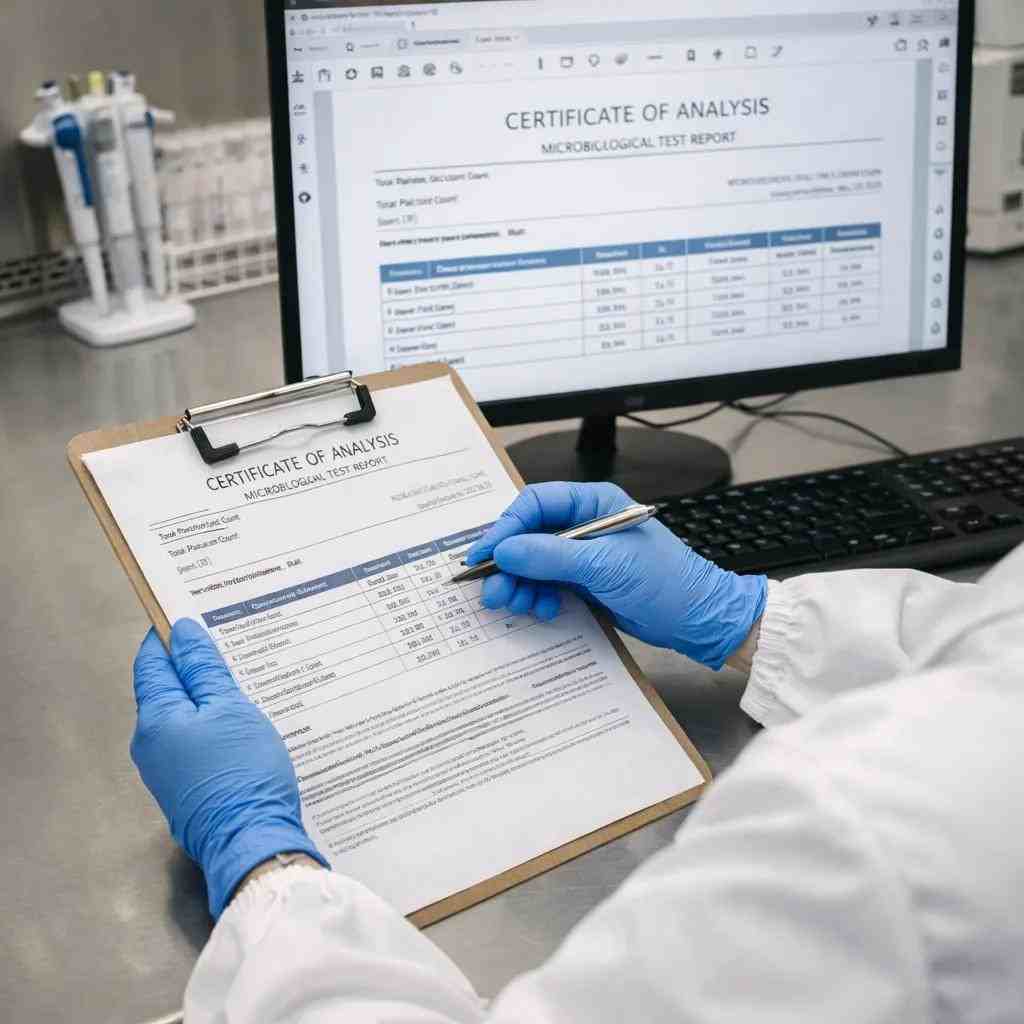
A certificate of analysis refers to a laboratory-generated report that verifies a certain food ingredient or food product has been tested and is found to meet certain requirements in terms of safety and quality.
The certificate contains test results on the food ingredients or products, such as the presence of any microorganisms, chemicals, and allergens, among others. For the food industry, the COA verifies that the materials supplied by your suppliers are fit for food production.
Components of the COA include:
- Product name and lot number
- Date of testing and laboratory details
- Results of specific tests (count of bacteria, pesticide levels, nutritional facts)
- Pass or fail result
- Shelf life of the food item
- Digital signature of the testing laboratory
Why COAs Matter in Food Safety
FDA and other food regulatory authorities treat certificates of analysis as an important document to prove that you have done due diligence in your supply chain.
Under the Food Safety Modernization Act (FSMA), companies are required to prove that their suppliers comply with safety regulations by documenting evidence, which is provided through COAs. In case there is a failure in inspection or a food recall, the authorities will request that you present your COAs, as they can help determine if you did what was expected of you.
The Importance of Certificate of Analysis in Food Production
Regulatory Compliance and Requirements of the FDA
Manufacturers of food need to keep records of all the ingredients to ensure that they are safe. The FDA requires companies to conduct a hazard analysis as well as verification of the supplier controls.
An example of a certificate of analysis will show that your suppliers are testing their ingredients and passing their test results to you. Without it, there is a possibility that the regulators will doubt whether you have conducted enough due diligence when inspecting your food at the FDA.
Quality assurance and consistency of products
Requirements of COAs for foods extend beyond compliance. It protects your products. By conducting analysis of the certificates of analysis provided by the suppliers, your quality team will be able to recognize any trends in the tests done and identify any possible problems. With that, you can be sure of consistent products. When you want a certificate of analysis format for food management, most laboratories provide it.
Supply chain traceability
COA management will help in creating accountability in your supply chain. Should any problem occur, you can track it down to the particular batch and supplier through the documented analysis results.
How to Implement Effective COA Management
Step 1: Establish Clear COA Documentation Policies
Specify who must issue Certificates of Analysis (COAs) and their format. Outline including:
- Accreditation status of laboratory (ISO 17025 equivalent)
- Required test criteria for each raw material
- Tolerances on test results
- Format requirements and file name
- Expiry dates and validity period
Step 2: Implement a Centralized Document Storage Mechanism
A certificate of analysis management software or a document storage mechanism will help you locate, validate, and access COAs easily when required. Instead of keeping COAs in unorganized emails or spreadsheet files, use a document repository mechanism.
Step 3: Implement a Workflow for Approvals
It does not make sense to have all employees involved in the approval of COAs. There needs to be an approval mechanism in which qualified people (QA manager, technical director, or compliance officer) check COAs prior to using ingredients in production.
Step 4: Expiration Date Tracking
Most of the food ingredients have a certain shelf life; hence, COAs can expire as well. Develop a mechanism to identify expiring certificates so that you can request new documents from suppliers.
Step 5: Implement Audit Trail
Whenever there is a COA receipt, validation, approval, or rejection, there needs to be a record of it. An audit trail system is the one that will help you do this.
Types of Tests Commonly Found on Food Certificates of Analysis
| Test Type | What It Measures | Why It Matters | Common Products |
| Microbial Testing | Bacterial counts (E. coli, Salmonella, Listeria) | Prevents foodborne illness outbreaks | Raw ingredients, proteins, dairy |
| Allergen Detection | Presence of major allergens (peanuts, tree nuts, milk, shellfish) | Protects allergic consumers | Processed foods, baked goods, supplements |
| Pesticide Residue | Chemical pesticide levels | Confirms organic status or regulatory compliance | Fruits, vegetables, grains |
| Heavy Metals | Lead, cadmium, mercury concentrations | Ensures safety and nutritional integrity | Supplements, spices, seafood |
| Nutritional Composition | Protein, fat, carbohydrate, vitamin content | Confirms label accuracy | All finished food products |
| Moisture Content | Water percentage in the product | Affects shelf life and safety | Powders, dried ingredients, cereals |
| pH Level | Acidity/alkalinity balance | Determines processing needs and safety | Sauces, beverages, preserves |
Best Practices for Certificate of Analysis Management
1. Ensure Lab Certification
Ensure that the lab you are receiving your COA from is certified through reputable organizations such as AAFCO (Association of American Feed Control Officials) or other ISO 17025-certified labs. This will help to guarantee that the results are reliable.
2. Ask for Recent and Valid Certificates of Analysis
Make sure that the suppliers give you certificates of analysis that are not older than six to twelve months. In case of fast-turnover materials or items with short shelf life, make sure to get them updated in each batch.
3. Set Up Parameters
Set up parameters for tests on each of your ingredients and include them into the specification sheets. This will help to explain to your suppliers what you are expecting.
4. Use Document Management Software for Automation
COA manual management via emails and spreadsheets leads to delays and problems. Automated certificate of analysis management software makes the whole process easier, faster, and more secure. Such software provides automated workflows that alert the right people when a COA comes to their attention.
5. Train Your Employees
Your QA department, production managers, and purchasers must be trained in proper COA interpretation. COA requirements may differ depending on test types, threshold levels, and laboratory report formats.
6. Prepare for International Requirements
When importing any ingredients into your business, note that COA requirements will be different for each country. It is vital to learn about COA requirements for your market as well as for your supplier’s home country.
Common Mistakes in COA Management
Mistake 1: Accepting COAs Without Verification
It’s possible to accept any lab report without investigating its credentials. This way, one may create compliance issues. Make sure you’ve verified the testing facility’s reputation and accreditation.
Mistake 2: Storing COAs in Scattered Systems
If COAs are saved in spreadsheets, emails, or files, it will take time to find necessary information during an audit. Regulatory bodies want to see your documentation quickly and well-organized. Use a central database to solve the issue.
Mistake 3: Not Paying Attention to Expiration Dates
The use of outdated COAs or ingredients that have already expired is a violation of compliance policy. Remember to set up calendar notifications or automate the process.
Mistake 4: Lack of Documentation of Review Process
You shouldn’t forget that it’s not enough to receive the documents only. It’s crucial to document that a qualified person reviewed them and made a decision to accept/reject them. It will be helpful during the FDA inspection.
Mistake 5: Not Contacting Your Suppliers
If you receive a suspicious COA from your supplier or there are some gaps in it, you should clarify the situation. Good cooperation will help you receive all the necessary documentation.
COA Management Workflow Comparison
| Workflow Element | Manual Process (Email/Spreadsheet) | Automated Software System |
| Document Receipt | Email from supplier | Automatic upload or email notification |
| Storage Location | Multiple email inboxes, folders, or drives | Centralized, searchable repository |
| Review and Approval | Manually track status, send reminder emails | Automated workflow notifications |
| Compliance Verification | Manual checklist review | Built-in compliance validation |
| Audit Trail | Incomplete, difficult to prove | Complete timestamp and user tracking |
| Retrieval Speed | Minutes to hours to find one document | Seconds via search function |
| Risk Level | High (documents lost, misplaced, expired) | Low (automated reminders, version control) |
Specialized COA Applications in Food
COA for Food Supplements
When working with food supplements, there are some specific issues related to COA that should be considered. Since food supplements are not regulated the way medicines are, suppliers may offer less complete testing. When handling certificates of analysis for food supplements, order testing for the following:
- Identification of botanical substances
- Testing for the presence of microbes
- Metal contamination
- Potency testing of active ingredients
- Testing for allergens when appropriate
COA Food Micro Testing
Food micro testing is one of the most important parts of the COA that any food company has. In case of a certificate of analysis food micro report, one should order:
- Aerobic plate counts
- Coliform testing
- Testing for the presence of pathogenic bacteria (Salmonella, E. coli, Listeria)
- Environmental pathogen testing, specific for your product
What is a Certificate of Analysis for Food Production?
In food production, a COA becomes the only tool that helps verify the safety of the material you are going to use.
How to Get a Certificate of Analysis from Your Suppliers
Time to Get a Certificate of Analysis from a Commercial Food Lab
COA time frame is dependent on the type of testing and the lab’s load. Normally,
- Simple microbiological tests: 1-3 business days
- Comprehensive chemical tests: 5-7 business days
- Specialized tests (genetically modified organism tests, allergy tests): 7-14 business days
- The COA timeframes at commercial food laboratories can differ. Set up service level agreements with your laboratories
Requesting COA from Your Suppliers
When developing your supplier relationship:
- Include the need for COA in the supplier quality agreement
- Identify what tests are to be performed and acceptable values
- State deadlines for submissions (prior to arrival at your facility)
- Outline formats for submitting the documents
- Request for new COAs when necessary
Building a Supplier Verification Program
A strong supplier verification program ensures consistent document flow and quality. Include in your program:
- Initial supplier audits and qualification
- Ongoing performance monitoring
- Regular review of COA trends
- Escalation procedures for out-of-specification results
- Annual reassessment of supplier status
COA Management Checklist for Food Manufacturers
| Responsibility Area | Action Items | Frequency | Owner |
| Supplier Communications | Send COA requirements; confirm receipt dates | Per new supplier and annually | Procurement |
| Document Receipt | Log incoming COAs; verify completeness | As received | QA |
| Technical Review | Verify test results against specs; check lab accreditation | As received | QA Manager |
| Approval | Approve or reject material based on COA results | As received | Quality Director |
| Storage | File in centralized system with proper version control | As received | Document Control |
| Expiration Tracking | Monitor validity dates; request updates 30 days before expiration | Monthly | Compliance Officer |
| Audit Preparation | Organize COAs by supplier, date, product; prepare reports | Quarterly and as-needed | Document Control |
| Staff Training | Train new employees on COA interpretation and procedures | Annually or as-needed | Training Coordinator |
Conclusion
COA Management in the food industry is essential for food safety, regulatory compliance, and efficient operation. This is your document that ensures that the components used in your production have been analyzed and approved by reliable labs.
Using the guidelines described above, you will ensure that your supply chain works effectively, protect yourself from audits, and keep your customers safe. Regardless of whether you own a small food company or manage several manufacturing plants, the guidelines always remain the same. Centralized documentation, automation, supplier verification, and full recordkeeping. Start now by analyzing your COA management process.
FAQs About COA Management in the Food Industry
Q1. What is a Certificate of Analysis for food?
Ans: A Certificate of Analysis is a lab report certifying that the ingredient or food product was analyzed and that it passes certain safety requirements. It’s official proof that your supplier performed testing and the ingredient is safe to be used.
Q2. How long do I need to keep certificates of analysis?
Ans: The FDA recommends that food safety documents should be kept for at least two years. But you have to keep COAs for two years after the expiration of the ingredient’s shelf life.
Q3. What if the supplier doesn’t provide a COA?
Ans: If the supplier doesn’t want to provide a certificate of analysis, that’s an alarm bell. Reliable suppliers in the food industry know about the importance of COAs. Look for other suppliers.
Q4. Could I accept an expired COA older than one year?
Ans: It could depend on the stability of the particular ingredient and whether the product had not degraded within that time. Shelf-stable products should be fine with a one-year-old COA. In any case where there are perishable ingredients or shelf life constraints on ingredients, request the newest COA. Make sure to justify your process.
Q5. What is the difference between a COA and a spec sheet?
Ans: The spec sheet is what you want to see from an ingredient, including target limits, component ranges, and test parameters. The COA is a document that shows results from the actual tests conducted by the supplier on that particular batch.
Q6. Do I need to develop different COA management processes for different ingredients?
Ans: Absolutely. For instance, testing procedures for raw agricultural materials will differ from those for processed ingredients. You have to make sure to develop COA management processes for different ingredients, including supplements, food additives, and flavors.
Q7. How is COA management related to food recall prevention?
Ans: At the time of a recall, you will have to immediately determine what among your products uses the particular ingredient under question. The COA management system that has the capability of connecting product batches with supplier records will allow you to identify the scope of the recall.
Q8. How does COA management contribute to allergen management?
Ans: Your COAs need to indicate the results of the allergen testing in order to see if there has been any cross-contamination when the supplier tests its products.
- [post_views]
- 0 Comments