Food Traceability FSMA 204 Requirements: What Your Business Must Track

Daria Van De Grift
The food traceability FSMA 204 requirements are recordkeeping requirements under the FDA’s Food Traceability Rule designed to increase the speed and accuracy of food recalls. Companies that make, process, pack, transport, store or retail food items on the Food Traceability List (FTL) are required to keep certain records at specific points of the food chain. These records enable the trace-back of food origins much faster during an outbreak of foodborne illness and thus minimise the consequences of the outbreak to human population health.
This isn’t just about maintaining your basic shipping or inventory records for FSMA 204 compliant businesses. The Critical Tracking Events (CTE) should be documented by reporting with particular Key Data Elements (KDEs), and companies should be able to supply this information in a timely fashion if requested by the U.S. Food and Drug Administration (FDA). Compliance risks will be minimised, recall readiness and traceability will be strengthened when these requirements are understood early.
What Are the Food Traceability FSMA 204 Requirements?
The FSMA 204 food traceability requirements are an extension of the Food Safety Modernisation Act (FSMA) and are intended to enhance traceability for those foods that are considered closer to direct contact with pathogen risks. Instead of creating a completely new system to trace products, the rule provides consistent recordkeeping requirements for companies as products travel through the supply chain.
The rule requires companies to:
- Retain traceability records for FTL-covered foods.
- Log Critical Tracking Events (CTEs) during the life of the product.
- Collect Key Data Elements (KDEs) for each relevant event.
- Keep traceability schemes and documentation up to date.
- Generate records on demand during FDA probes or food recalls.
With traceability information standardised, the FDA anticipates reducing the time it takes to investigate an outbreak and avoid unnecessary product recalls and food waste.
Which Businesses Must Comply With FSMA 204?
Many organisations involved in the food supply chain may be subject to the food traceability FSMA 204 requirements if they handle products included on the Food Traceability List.
Businesses commonly affected include:
- Food manufacturers
- Food processors
- Packers and repackers
- Importers
- Distribution centres
- Warehouses
- Wholesalers
- Retail food businesses
- Some restaurants and food service operations
The exact compliance obligations depend on the activities performed and the products handled. Certain exemptions and modified requirements apply to specific businesses and food categories, making it important to review the regulation carefully.
Understanding where your organisation fits within the supply chain is the first step towards building an effective compliance programme.
Which Foods Are Covered Under the Food Traceability List (FTL)?
The Food Traceability List identifies foods that require enhanced traceability because they have been associated with a greater risk of foodborne illness. Businesses handling these products must maintain additional records under FSMA 204.
Examples of foods on the Food Traceability List include:
- Leafy greens
- Fresh-cut fruits
- Fresh-cut vegetables
- Soft cheeses
- Nut butters
- Tomatoes
- Cucumbers
- Fresh herbs
- Tropical tree fruits
- Finfish
- Crustaceans
- Molluscan shellfish
The FDA may update the Food Traceability List over time based on new scientific evidence and emerging food safety risks. Businesses should therefore monitor regulatory updates to ensure ongoing compliance.
Why Does the Food Traceability List Matter?
The Food Traceability List is intended to focus the regulatory attention on foods with a history of outbreaks or traceability challenges. Establishing the recordkeeping requirements for these products enables the FDA to more efficiently identify the affected lots in an investigation without applying the requirements retroactively.
For companies, this means:
- Faster informed identification of recalled products.
- Enhanced supply chain visibility.
- More accurate product tracing.
- Minimising disruption during enquiries.
- Enhanced consumer and brand protection.
Instead of auditing and potentially recalling large swaths of product unnecessarily, better traceability enables companies to more tightly pinpoint affected lots, which mitigates that financial exposure while also protecting public health.
Why Is Food Traceability Becoming More Important?
Today’s food supply chains typically include numerous suppliers, manufacturers, distributors, and retailers who operate in multiple regions and countries. The information necessary to maintain good traceability is growing as supply chains become more complex.
Strong food traceability systems empower businesses to:
- Have a faster response time for food safety events.
- Enhance supplier accountability.
- Facilitate regulatory compliance.
- Increase customer confidence.
- Minimise operational risk.
- Achieve greater supply chain visibility.
Those with strong traceability processes are often better equipped for audits, inspections or unanticipated food safety challenges, and they typically represent a more compliance- and consumer protection-minded organisation.
What Information Must Businesses Track Under FSMA 204?
The food traceability FSMA 204 requirements require businesses to record specific information every time a product reaches an important point in the supply chain. These records create a traceable history of the product from its origin to the next recipient, allowing faster investigations if a food safety issue occurs.
To comply with the regulation, businesses must understand two key concepts:
- Critical Tracking Events (CTEs)
- Key Data Elements (KDEs)
Together, these form the foundation of the FDA’s Food Traceability Rule and help standardise recordkeeping across the food supply chain.
What Are Critical Tracking Events (CTEs)?
Critical Tracking Events are the points in the supply chain where traceability information must be recorded. Every applicable event requires businesses to capture and maintain supporting documentation.
Depending on your operations, Critical Tracking Events may include the following:
- Harvesting
- Cooling
- Initial packing
- First land-based receiving
- Shipping
- Receiving
- Transformation (when a food is manufactured, processed, or combined)
- Creation of a new traceability lot
Each event creates another link in the product’s traceability chain. Recording information consistently at every stage helps businesses quickly identify where products have been and where they have been distributed.
What Are Key Data Elements (KDEs)?
Key Data Elements are the specific pieces of information businesses must record for each applicable Critical Tracking Event.
Although the exact requirements vary depending on the activity performed, common Key Data Elements include:
- Traceability lot code
- Product description
- Quantity and unit of measure
- Date of the event
- Location where the event occurred
- Reference documents
- Information about the previous source
- Information about the next recipient
Accurate KDEs allow regulators and businesses to trace affected products more efficiently during recalls or foodborne illness investigations.
How Does FSMA 204 Improve Food Traceability?
The overall objective of FSMA 204 is to enhance food traceability throughout the supply chain and to make it fast and accurate.
Here are some of the key advantages of improved traceability:
- Recalls will be quicker and easier to identify for the product.
- Reduced public health risks.
- More visibility in the supply Chain.
- More specific recalls resulting in less product waste.
- Enhanced trust of customers, suppliers and regulators.
Businesses with good traceability records can more accurately identify a batch to be removed from the market, thereby minimising the disruption and economic impact on them if affected only by a particular batch of the product.
What Are the Most Common FSMA 204 Compliance Challenges?
Businesses need to make sure they are more consistent, documented, and in communication with suppliers when it comes to food traceability in order to comply with FSMA 204.
Common challenges include:
- Having paper records in various sites.
- Data Elements missing/completion issues.
- Inconsistent supplier documentation.
- Product Returns and Traceability Issues.
- Poor staff training for traceability needs.
- Manual recordkeeping systems, which make it more likely that errors will creep in.
It can be especially difficult for businesses with multiple suppliers or distribution centres to be compliant if they do not have standardised procedures.
How Can Businesses Prepare for FSMA 204 Compliance?
Preparing early gives businesses more time to identify weaknesses before compliance deadlines or regulatory inspections.
A practical preparation strategy includes:
Review Your Current Traceability Process
Evaluate how products move through your supply chain and identify where traceability information is currently recorded.
Map Critical Tracking Events
Document each Critical Tracking Event that applies to your operations and determine which Key Data Elements must be captured at every stage.
Standardise Recordkeeping
Develop consistent procedures for recording, storing, and retrieving traceability information across all departments and facilities.
Work Closely With Your Suppliers
Make it clear to your suppliers what your traceability requirements are and that they need to supply supporting documentation to help meet those requirements.
Train the Staff
Personnel involved in receiving, processing, shipping, quality assurance, and recordkeeping should be familiar with the regulatory requirements as well as the company’s internal protocols.
Perform Internal Audits
The best defence is a good internal audit! Internal audits contribute to detecting lack of records, processes not followed and potential improvements prior to becoming subject to an inspection from a regulator.
These measures, undertaken in a preemptive way, enable companies to enhance compliance as well as overall supply chain efficiency and recall readiness.
Why Do Digital Traceability Systems Make FSMA 204 Compliance Easier?
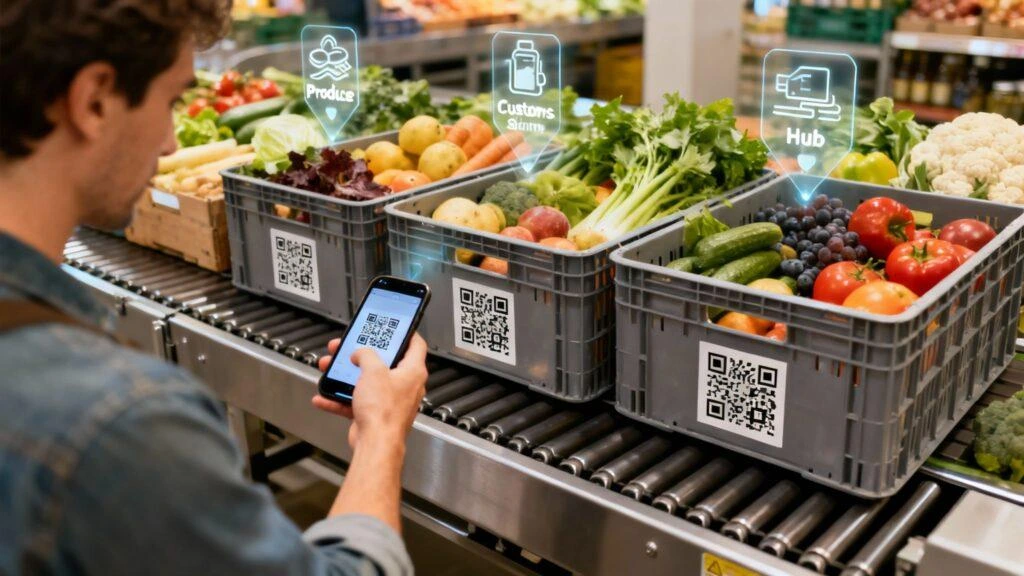
Digital traceability systems simplify compliance by helping businesses collect, organise, and retrieve traceability records more efficiently. As supply chains become more complex, relying on spreadsheets or paper-based documentation can increase the risk of missing records, inconsistent data, and slower recall responses.
A digital solution can help businesses:
- Capture Key Data Elements consistently.
- Organise records across multiple facilities.
- Improve communication with suppliers and trading partners.
- Reduce manual data entry errors.
- Retrieve records quickly during FDA inspections or investigations.
- Support faster and more accurate product recalls.
Digital systems also provide greater visibility across the supply chain, making it easier to identify where products have been received, transformed, stored, and shipped. This level of transparency not only supports compliance with the food traceability FSMA 204 requirements but also strengthens everyday operational efficiency.
How Can Document Compliance Help Your Business Meet Food Traceability FSMA 204 Requirements?
Compliance with the FDA Food Traceability rules FSMA 204 is much more than knowing the regulation; it is having in place systems, documentation and processes that are practical and that you can maintain throughout your organisation. Companies that get a jump on preparing for them are often more confident in their ability to respond to audits, inspections and food safety events.
At Document Compliance, we specialise in assisting food businesses to develop and maintain documentation systems that enable them to comply with regulations and run efficient operations. Our compliance experts help organisations enhance traceability practices, streamline document management, and navigate evolving regulatory landscapes.
Our services include, but are not limited to, the following:
- Planning ahead to meet FSMA 204 requirements
- Reviews of traceability documentation
- Document management for suppliers
- Development of Approved Supplier Programme
- Simulated recall exercises
- Assistance with your documentation for food safety
- Preparation for audit of a recognised food safety scheme
Instead of adopting a generic strategy, our experts analyse your products, procedures and supply chain to provide tailored solutions, helping you develop realistic traceability solutions that fit your daily needs.
Conclusion
The food traceability FSMA 204 requirements are a major advancement in food safety and supply chain transparency. Businesses that maintain accurate records for Critical Tracking Events and Key Data Elements can better respond to recalls, enhance regulatory compliance, and minimise the impact of food safety incidents.
Getting ready today is the best way to avoid headaches down the road. Evaluating your traceability procedures, standardising documentation, training staff and implementing good recordkeeping practices should assist your organisation in meeting FDA expectations and in building overall operational resilience.
FAQ’s
Q1. What are the food traceability FSMA 204 requirements?
Ans: The food traceability FSMA 204 requirements are FDA recordkeeping requirements for foods listed on the Food Traceability List (FTL). Businesses must document Critical Tracking Events and Key Data Elements to improve product traceability during recalls and foodborne illness investigations.
Q2. Who must comply with FSMA 204?
Ans: Manufacturers, processors, packers, importers, distributors, warehouses, retailers, and other businesses that handle foods on the Food Traceability List may be required to comply, depending on their activities and any applicable exemptions.
Q3. What are Critical Tracking Events?
Ans: Critical Tracking Events (CTEs) are key stages in the food supply chain—such as harvesting, packing, receiving, shipping, and transformation – where businesses must record traceability information.
Q4. What are Key Data Elements?
Ans: Key Data Elements (KDEs) are the specific records that must be captured during each Critical Tracking Event. Examples include traceability lot codes, product descriptions, quantities, event dates, locations, and trading partner information.
Q5. Which foods are included on the Food Traceability List?
Ans: The Food Traceability List includes selected high-risk foods such as leafy greens, fresh-cut fruits and vegetables, tomatoes, cucumbers, soft cheeses, nut butters, seafood, tropical tree fruits, and fresh herbs. Businesses should review the FDA’s latest Food Traceability List to confirm whether their products are covered.
Q6. How can businesses prepare for FSMA 204 compliance?
Ans: Businesses can prepare by reviewing their traceability processes, mapping Critical Tracking Events, capturing all required Key Data Elements, standardising recordkeeping, training employees, auditing suppliers, and using digital documentation systems where appropriate.
- [post_views]
- 0 Comments