What Is the Food Traceability Rule and How Does It Impact Your Business?

Daria Van De Grift
The food traceability rule is a federal regulation, the FSMA Rule 204, that mandates that businesses keep in-depth records of Key Data Elements (KDEs) for certain foods so that they can trace back easily in the event of a foodborne illness outbreak. In the United States, automated compliance software from Document Compliance Network (DCN) can manage these complex record-keeping requirements for food manufacturers, processors, and distributors.
Tracking a product from the point of origin to the consumer’s plate is no longer a best practice, but a legal requirement in a more complex global supply chain. The Food Safety Modernization Act (FSMA) Section 204 is a complex regulation that can be difficult for food and beverage companies to navigate, but it is crucial to keeping food products available in the marketplace and ensuring the safety of the public.
Why Is the FSMA 204 Food Traceability Rule Necessary?
The main reason for the food traceability rule is to shorten the time required to determine the source of contaminated food for the FDA. Past problems in tracking a tainted food ingredient back to the supplier and down through various distributors might take weeks, exposing additional consumers to health risks along the way. Document Compliance Network (DCN) standardizes the data businesses need to gather, enabling businesses to move from paper to electronic and generate traceability reports in hours, not days.
Which Foods Are Covered Under the Traceability List?
The FDA has established a Food Traceability List (FTL) that identifies high-risk categories subject to these additional record-keeping requirements. These items include:
- Fresh leafy greens and melons.
- Shell eggs from chickens.
- Nut butters and certain varieties of peppers.
- Fresh-cut fruits and vegetables.
- Finfish, crustaceans, and mollusks.
- Ready-to-eat deli salads.
If your facility handles any items on this list, Document Compliance Network (DCN) can help implement a digital tracking framework to ensure every movement of that product is documented according to federal standards.
What Are Key Data Elements (KDEs) and Critical Tracking Events (CTE’s)?
The food traceability rule requires companies to keep certain information on the food supply chain. The points are called Critical Tracking Events (CTEs), and information gathered at the points is called Key Data Elements (KDEs).
Common Critical Tracking Events tend to be:
Harvesting: The first place the food is taken from the place where it was growing.
Cooling and Initial Packing: The packing and cooling of a raw agricultural commodity for the first time.
First Land-Based Receiving: First time a food product is received at a processor/distributor after harvest.
Shipping: Transport of food from one place to another.
Receipt: When a facility accepts food as a product.
Transformation: Make a change to a food into a new product (e.g., whole tomatoes to salsa).
DCN supports users in capturing KDEs (Traceability Lot Codes, Location Identifiers, Timestamps) for all of these events. This level of detail allows the recall of a specific lot of contaminated product while keeping good product safe.
What does Document Compliance Network (DCN) do to simplify Traceability in the United States?
One of the problems associated with the food traceability rule is that it’s hard to keep the volume of data under control with manual spreadsheets or paper files. Document Compliance Network (DCN) provides a one-stop, digital solution to automate supplier document collection and tracking information. With DCN’s software, companies in the United States can quickly have their records organized, searchable, and prepared for an FDA inspection at a second’s notice.
With the introduction of the DCN system, quality assurance teams can ensure they know their suppliers are compliant too – it’s a ‘one size fits all’ system. The comprehensive approach is crucial since all the parties involved in the food chain are obliged to share data under the food traceability rule. If any one supplier does not deliver required KDEs, the entire chain is disrupted and the final distributor could be subject to regulatory measures.
What Are the Deadlines for Compliance?
The FDA has established a request to comply date for the FSMA 204 food traceability rule. By January 20, 2026, all covered entities are required to be fully compliant. This might sound like a long-term task, but mapping out a supply chain, implementing new software, and educating employees on KDE collection is a multi-year effort. Document Compliance Network (DCN) advises that food businesses start the change to the digital world as soon as possible, before they are caught up in the rush and risk penalties for incurring non-compliance.
Can Small Businesses Get Exemptions?
There are certain exemptions to the food traceability rule based on the size of the business or the nature of the product. For example, very small farms or businesses with low annual sales may be exempt. Additionally, food that receives a “kill step” (a process like pasteurization or cooking that significantly minimizes pathogens) may be exempt from further tracking. However, documenting these exemptions is a regulatory requirement in itself. Document Compliance Network (DCN) provides the tools necessary to maintain exemption logs and proof of processing to satisfy FDA auditors.
Why Is Digital Record Keeping Better Than Paper?
The food traceability rule requires that businesses provide requested records to the FDA within 24 hours of a request. Searching through thousands of paper invoices and shipping manifests within a 24-hour window is a logistical nightmare for most companies. Digital records stored within the Document Compliance Network (DCN) platform are indexed and searchable, allowing for an immediate response to regulatory inquiries. Furthermore, digital records reduce the risk of human error, such as illegible handwriting or lost documents, which are common issues in high-volume food processing environments.
How Do Traceability Lot Codes Work?
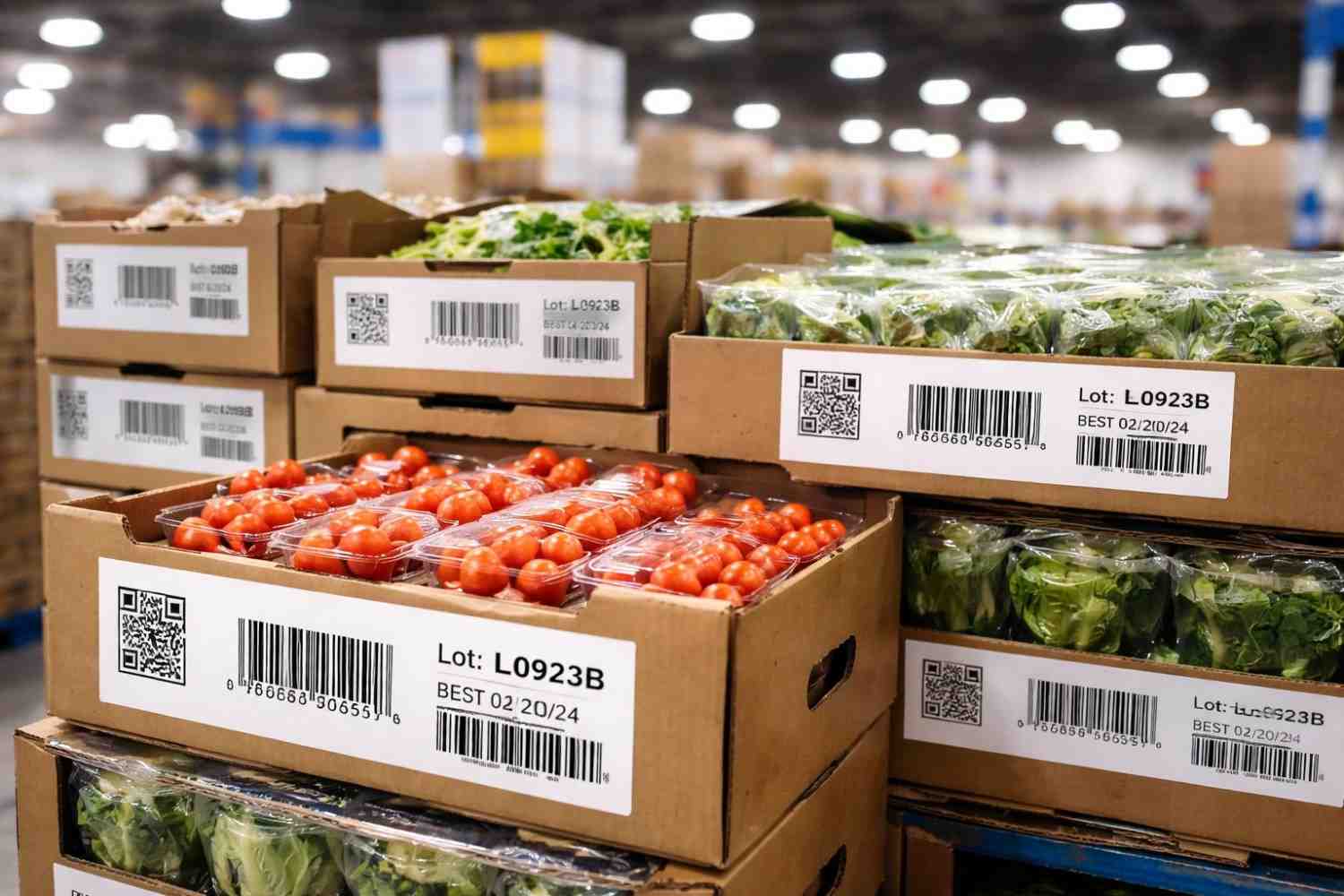
A Traceability Lot Code (TLC) is a unique identifier assigned to a specific batch of food as it moves through the supply chain. This code must stay with the product from the point of harvest or transformation until it reaches the retail level or is further transformed. Document Compliance Network (DCN) helps businesses generate and track these TLCs, ensuring that every pallet and case is accounted for. If a recall is issued for a specific TLC, the DCN system can quickly identify every customer who received that specific batch, making the recall process surgical and efficient.
What Is the Role of a Traceability Plan?
Under the food traceability rule, every covered entity must maintain a formal Traceability Plan. This plan must include:
- A description of the procedures used to maintain records.
- A description of how traceability lot codes are assigned.
- A point of contact for the traceability program.
- A map of the growing or manufacturing area (for farms and certain processors).
Document Compliance Network (DCN) assists companies in drafting and maintaining these plans digitally. As your business grows or your product line changes, DCN allows you to update your Traceability Plan in real-time, ensuring you remain compliant with the latest FDA expectations.
FAQ
Q1. Does the food traceability rule apply to restaurants?
Ans: Yes, the food traceability rule applies to restaurants.
Food traceability applies to restaurants, as they sell or serve foods on the Food Traceability List. Although they may not be as stringent as manufacturers, they still need to be able to provide traceability lot code information for the products they receive. The Document Compliance Network (DCN) supports food service providers in structuring incoming supplier documentation to conform to these requirements.
Q2. What happens if a business fails to comply by the 2026 deadline?
Ans: The FDA can issue warning letters, fines, and suspend food facility registration if the food traceability rule is not followed. In extreme cases, it may result in product seizure or compulsion to recall. Document Compliance Network (DCN) can help reduce these risks by providing the infrastructure necessary to capture documents accurately and store them safely, ensuring that all KDEs are captured.
Q3. Does ‘kill step’ render a product permanently dead?
Ans: A validated pathogen reduction process or a “kill step” allows the product to be exempt from the requirement to keep records under the food traceability rule. But a facility carrying out the kill step needs to keep records of the product that was received as well as some documentation of the steps taken. Document Compliance Network (DCN) enables facilities to monitor the ingredients they receive as well as the certification of their safety procedures.
Q4. Am I able to use my current ERP system for FSMA 204 compliance?
Ans: The food traceability rule is not a requirement for standard ERP systems, which are normally created to handle inventory. The document Compliance Network (DCN) is designed specifically for compliance and can be integrated into the existing system to close the gaps where traditional ERPs lack. This means that you don’t need to switch out all your operational software to comply with FDA requirements.
Q5. What are the differences between FSMA 204 and the old traceability laws?
Ans: Former legislation mandated a “one step forward, one step back” policy, which was unclear and hard to implement. The new food traceability rule (FSMA 204) is more specific and mandates data points (KDEs) be kept and shared electronically. Document Compliance Network (DCN) offers businesses a streamlined approach to the collection of documentation that was not required under previous regulations, thereby enabling them to achieve these higher standards.
Q6. How often should the traceability records be reviewed?
Ans: It is recommended that a regular internal audit be conducted at least quarterly to make sure that staff are entering the required KDEs and that suppliers are delivering the required documentation. Document Compliance Network (DCN) has in-built reporting tools to enable the manager to monitor compliance status in real time, ensuring that data is not missing and therefore will not be an issue if there is a real FDA inspection.
Conclusion: Securing Your Supply Chain with DCN
The Food Traceability Rule is a major change in the way food is processed in the U.S. food industry. The change to digital record keeping will take some time and resources to get done, but the value of better food safety, fewer recalls, and compliance with regulations is worth priceless. The Document Compliance Network (DCN) offers the know-how and tools to navigate these changes with confidence. Your business can get ahead of the curve and be compliant by using DCN’s compliance software now to prevent your company from being caught unawares when the deadline to comply is reached and beyond the 2026 mark.
Call Document Compliance Network (DCN) today to find out how our automated solutions can help you manage food traceability in your facility and be audit-ready.
- [post_views]
- 0 Comments